

Investing in the education workforce: Evidence and insights into what matters for SEND and inclusion
A compelling case for investing in the education workforce as the most effective path to transforming outcomes for learners with Special Educational Needs and Disabilities (SEND) was made at nasen’s reception held in the House of Lords last week. The evidence presented suggests that professional development for mainstream educators is not just a policy aspiration, but a proven, data-driven solution for achieving systemic change.
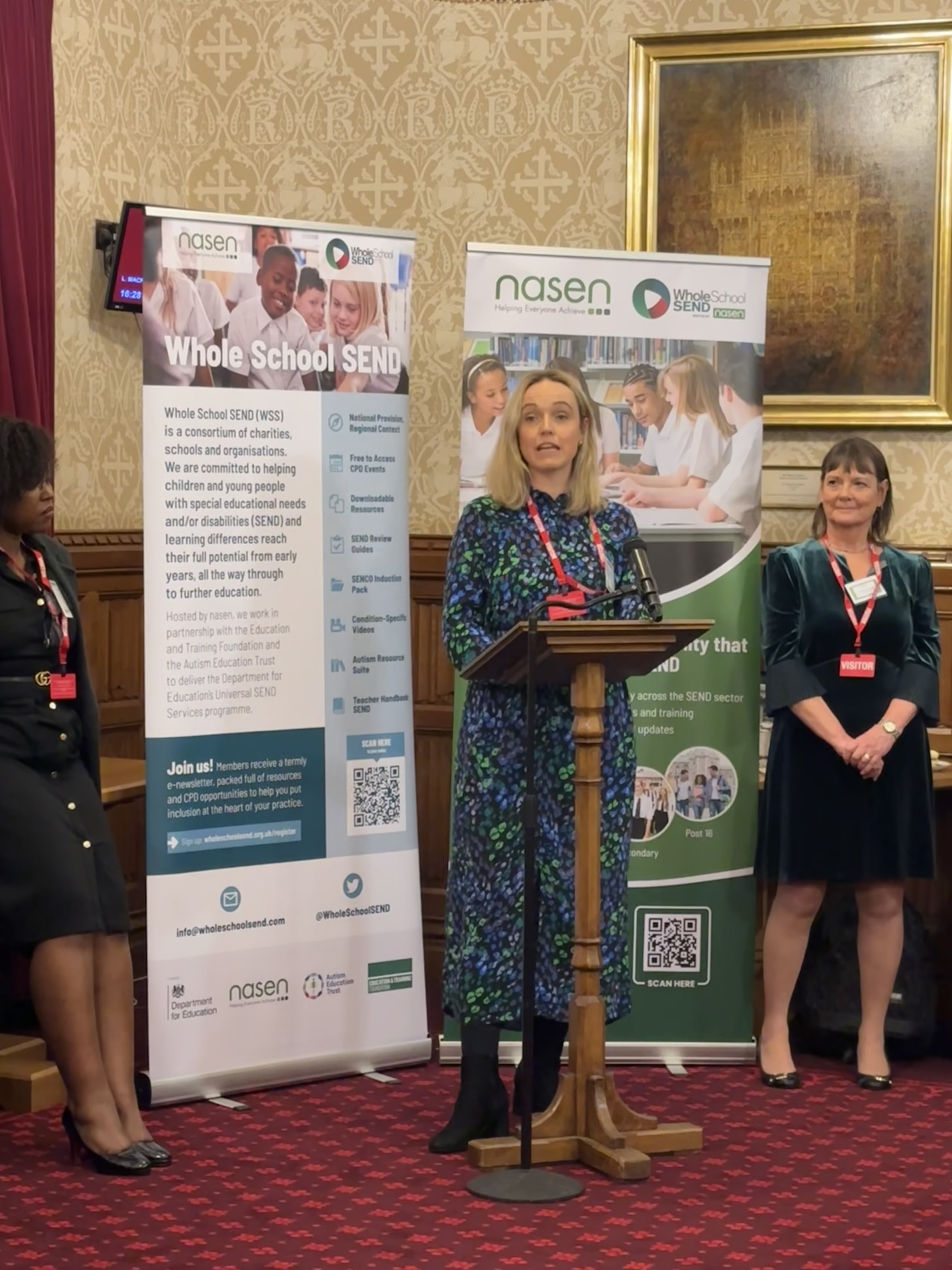
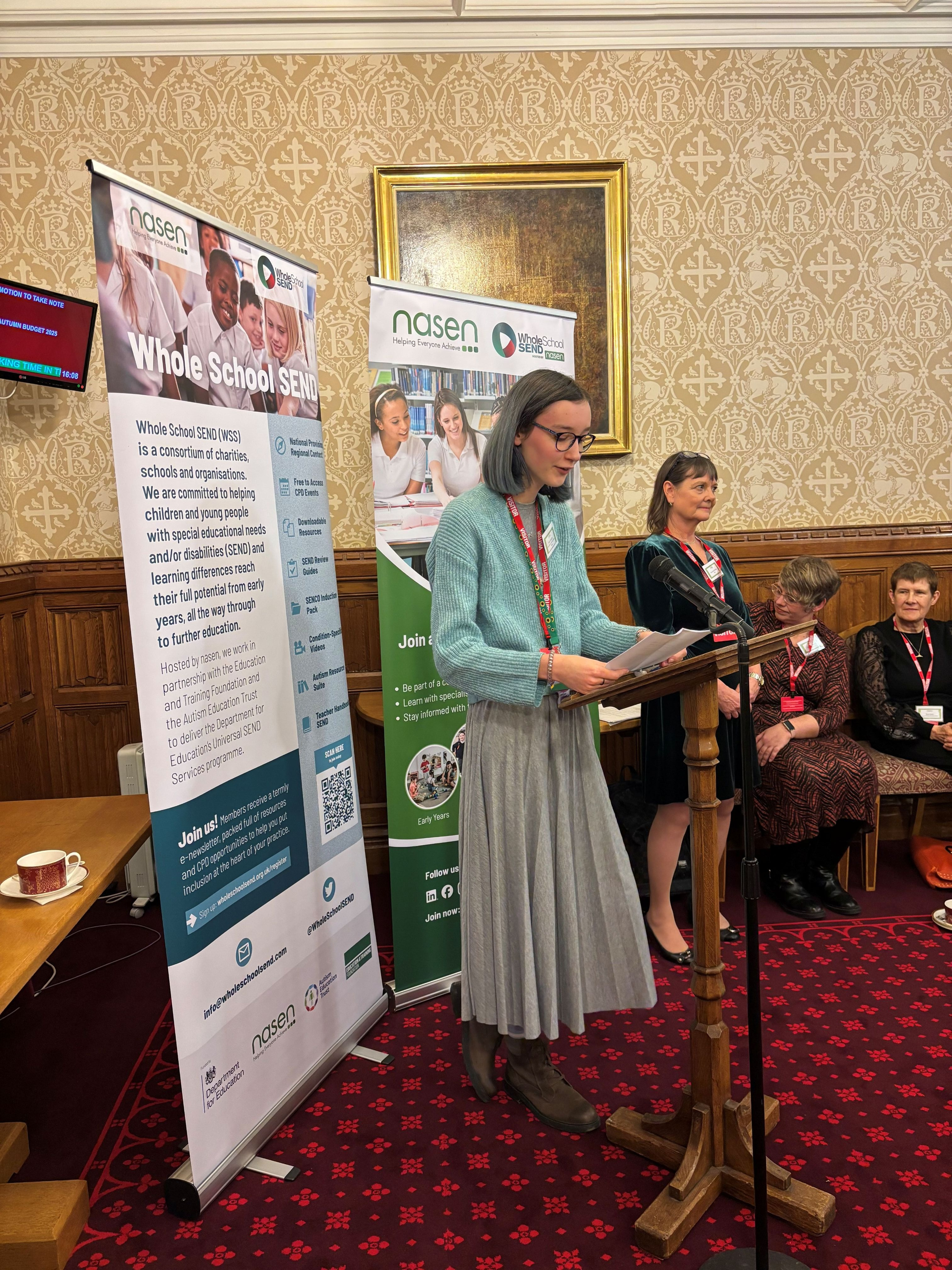
The critical role of classroom staff was the focus of the event, sponsored by Lord Jim Knight. The speakers, including nasen’s Chair of the Board of Trustees Phillipa Sherlock-Lewis, nasen CEO Annamarie Hassall, two members of the Whole School SEND Young People’s Advisory Group, Rebecca Gonyora – Director of Inclusive Learning, Every Child, Every Day MAT, and Amanda Wright, Head of Whole School SEND, shared powerful testimonies and hard data, stressing that investment in professional development is the “lever for equity”. The experiences of the young people were described as the “heartbeat of why we are here,” grounding the national policy conversation in the human reality of the challenge faced, but also the opportunity ahead.
Both the data and research presented evidenced a critical finding: when teachers are equipped with the right knowledge, their self-efficacy – that belief in their own ability to influence student learning – rises dramatically. This increase in teacher confidence is vital for shifting culture, tackling the "deficit-led" thinking, and empowering educators to employ a wider range of strategies and persist with personalised, adaptive approaches, ultimately benefiting all pupils.
Through Whole School SEND, nasen has been delivering the DfE funded Universal SEND Services Programme since 2022. A professional development programme aimed at the mainstream school and college workforce to increase confidence in identifying and meeting the needs of learners with SEND. In partnership with the Education and Training Foundation, and up until March 2025, the Autism Education Trust, training and support has been accessed by over 300,000 education professionals during the programme. Impact evidence, from the programme, was shared with attendees at the event documenting clear, measurable outcomes for hundreds of settings that have participated in the programme, including:
- Improved wellbeing and engagement in learning
- Reductions in suspensions and exclusions
- Improvements in attendance rates
- Academic gains
Insights from the evidence collected shows that improving outcomes for learners with SEND, in mainstream settings rests on three essential pillars:
- Strategic Leadership: Inclusion must start at the top, with leaders trained to be data-informed advocates for inclusion. This shifts SEND from being solely the responsibility of the SENCO's to a whole-school priority, enabling a true culture shift.
- Deepening Expertise: The goal is to equip every educator, including support staff, with the expertise to ensure high-quality, adaptive teaching happens within the main classroom.
- Collaborative Capacity: When settings stop working in isolation and invest time in true collaboration – with families, specialists, other schools, and critically, with young people themselves, learner engagement and wellbeing improves.
Ultimately, the evidence shared at the House of Lords established one critical truth: the most effective investment the education system can make is in the expertise of its people. The DfE-funded Universal SEND Services Programme, delivered by nasen through Whole School SEND, has demonstrated how targeted professional development unlocks a virtuous cycle—boosting staff confidence to drive the adaptive teaching that results in tangible, positive change for learners. The challenge to ensure true inclusion across the country remains, but by following this proven blueprint, we commit to a more equitable, and hopeful future for all children and young people.
________________________________________
For more information on evidence-led professional development for inclusive education, you can explore the resources offered by Whole School SEND who deliver the Universal SEND Services Programme on behalf of the Department for Education